ADVANCED BATTERY TECHNOLOGIES

Safer Batteries.
Circular Future.

Pioneering fire-resistant battery materials and direct regeneration technologies for a more sustainable energy future.

SAFER
BATTERIES
CIRCULAR
MATERIALS
SUSTAINABLE
ENERGY STORAGE
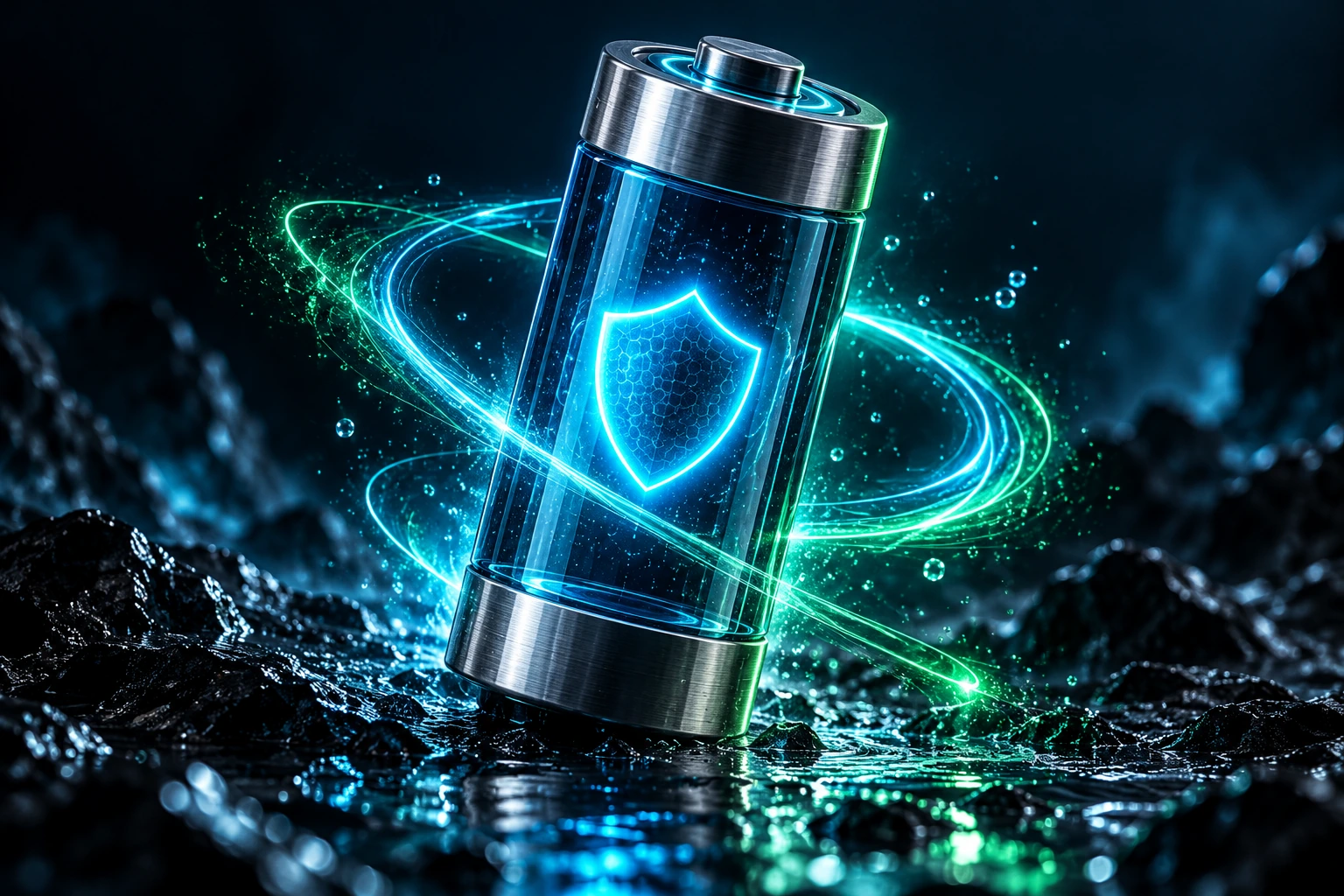
Futuristic battery illuminated by blue and green energy rings
ADVANCED MATERIALS
CONCEPTUAL TECHNOLOGY VISUAL
SCROLL TO EXPLORE

TWO PLATFORMS. ONE PURPOSE.

Safety at the start.
Value beyond the end.

Connecting advanced battery materials with a circular approach to end-of-life cathodes.

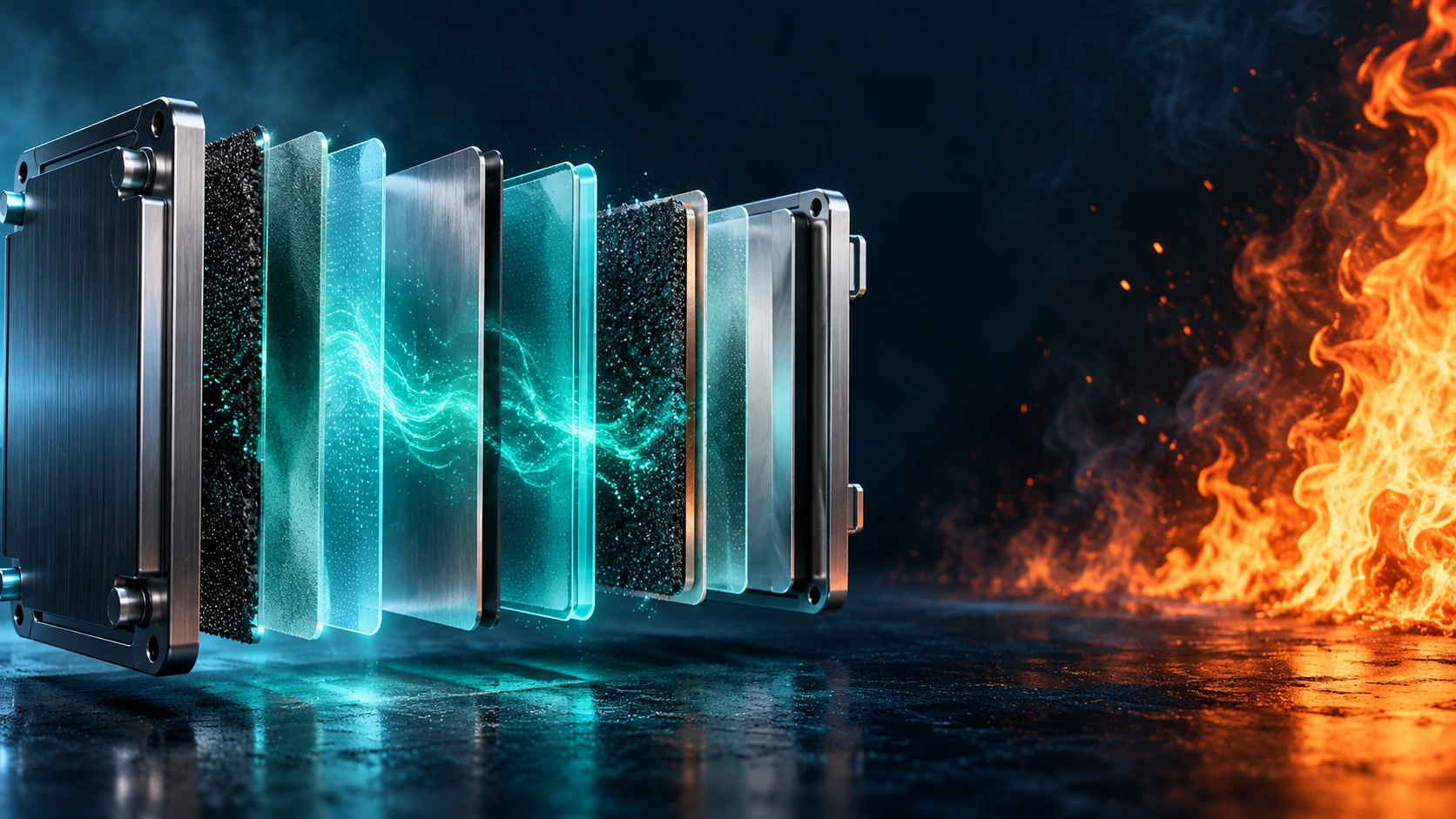
Illustration of a layered battery material exposed to flame
01

Fire-Resistant
Battery Technologies

Advanced polymer electrolytes and flame-retardant composites for safer energy storage.

  • Flame-retardant polymer electrolytes
  • Ionic transport and structural integrity
  • Laboratory UL 94 V-0 performance
  • Thermal and electrochemical evaluation
LABORATORY PROOF OF CONCEPT
Illustration of cathode powder surrounded by recycling arrows
02

Direct Regeneration of
End-of-Life LFP Batteries

Recovering and regenerating cathode materials to retain their value in a circular battery economy.

  • Direct recovery of LFP cathode materials
  • Targeted lithium restoration and defect repair
  • Greener separation under development
  • Validation for future material reuse
LABORATORY FOUNDATION · SCALE-UP PLANNED

THE CHALLENGES WE ADDRESS

A better future
for battery materials.

Battery safety

Develop materials with improved fire resistance.

Material circularity

Preserve the structure and value of recovered LFP.

Greener processing

Work towards lower-solvent, scalable recovery.

FROM END-OF-LIFE TO NEW VALUE

Direct Regeneration Process

A structure-preserving approach to recovering LFP cathode materials. Explore each stage.

01 / 04

Battery disassembly

Recover spent cells and prepare end-of-life LFP batteries for cathode separation through controlled handling and disassembly.

PROCESS CONCEPT

Process imagery is illustrative. Commercial throughput and recovered-material performance remain development targets.

TECHNOLOGY INNOVATION & VALIDATION

Laboratory evidence.
Real-world potential.

Two complementary platforms, with clear foundations and distinct development pathways.

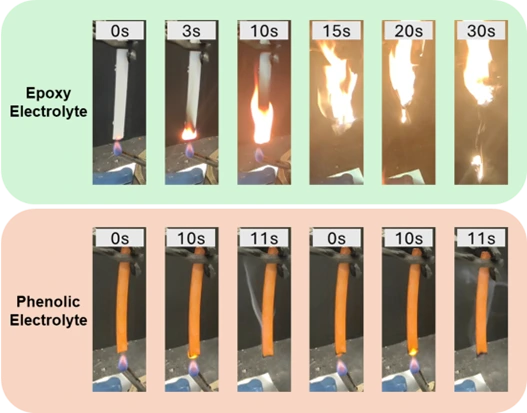
Experimental comparison of epoxy and phenolic electrolyte specimens during flame testingACTUAL LABORATORY IMAGERY

FIRE-RESISTANT MATERIALS

Polymer electrolytes
designed for safer batteries.

  • TRL 3 laboratory proof of concept
  • UL 94 V-0 flame retardancy reported for tested material formulations
  • Electrochemical, thermal and prototype circuit testing
  • Polymer electrolyte and structural battery coupons fabricated
NEXT DEVELOPMENT STEP

Optimise formulations, validate cell performance and develop scalable processing with industry.

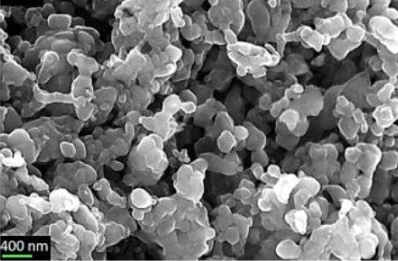
Scanning electron microscopy image of LFP material supplied in the pitch deckACTUAL MATERIAL CHARACTERISATION

CIRCULAR BATTERY MATERIALS

Preserve the material.
Recover its potential.

  • Laboratory proof-of-concept foundation at TRL 3
  • Solvent-based cathode separation demonstrated at laboratory scale
  • Initial validation of material structure retention
  • Morphology, phase and basic electrochemical characterisation
NEXT DEVELOPMENT STEP

Develop greener separation and targeted regeneration, progressing towards TRL 4–5 validation.

Material-level laboratory results do not establish safety certification or performance of a commercial battery pack.

POTENTIAL APPLICATIONS

Powering a Safer,
Cleaner Tomorrow

Developing materials for the places where safety, performance and resource efficiency matter.

Conceptual application imagery. These scenes do not depict Nintifire products or deployments.

OUR VISION

Enabling safer, more sustainable
and circular energy storage.

Bringing Australian materials research towards practical industry applications, with opportunities for collaboration across the Asia-Pacific region.

INNOVATION
IN MATERIALS
CIRCULAR
BATTERY ECONOMY
GLOBAL
REAL-WORLD POTENTIAL

FROM RESEARCH TO INDUSTRY

A clear direction for commercialisation.

Our priorities are material validation, pilot development and partnerships that connect research with manufacturing needs.

01 · VALIDATE

Refine the materials

Optimise electrolyte formulations and LFP regeneration pathways. Establish application-specific testing requirements.

02 · DEVELOP

Build with industry

Explore sample evaluation, joint development and pilot processing with battery and materials companies.

03 · SCALE

Translate to practice

Assess materials supply and manufacturing opportunities. Explore licensing subject to appropriate IP agreements.

These are forward-looking commercialisation priorities. Commercial-scale production and licensing agreements are not represented as achieved.

OUR TEAM

A Complementary Team
with Global Perspective

Expertise across advanced materials, battery technologies, manufacturing and commercialisation.

INDUSTRY COLLABORATION

Let’s build a
better battery future.

We welcome conversations with battery manufacturers, materials companies, recyclers, research collaborators and commercialisation partners.

Contact Dr Zhao Sha ↗

Australia · Collaboration across Asia-Pacific

Materials evaluationJoint developmentCircular battery research

Opens a prepared message in your email app. Nothing is submitted or stored on this website.